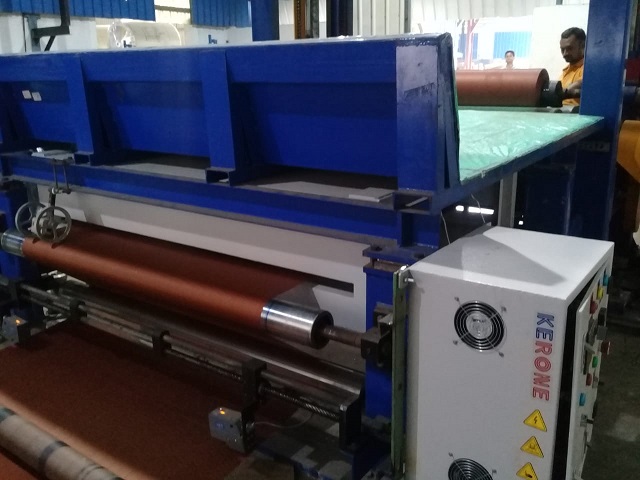
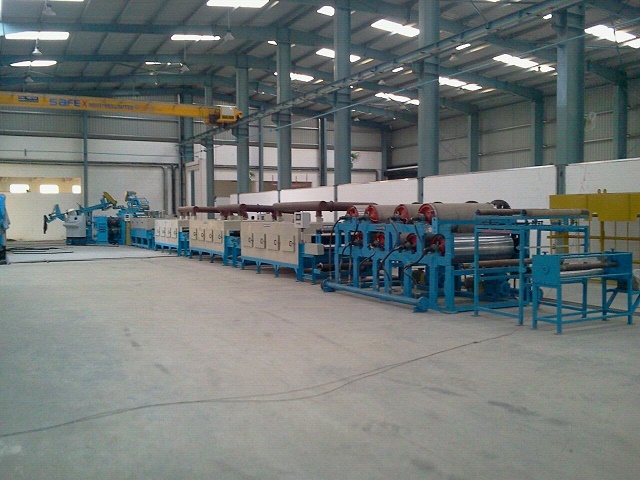
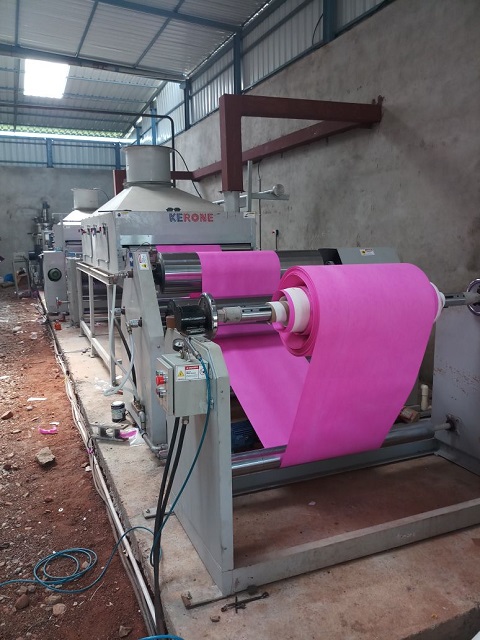
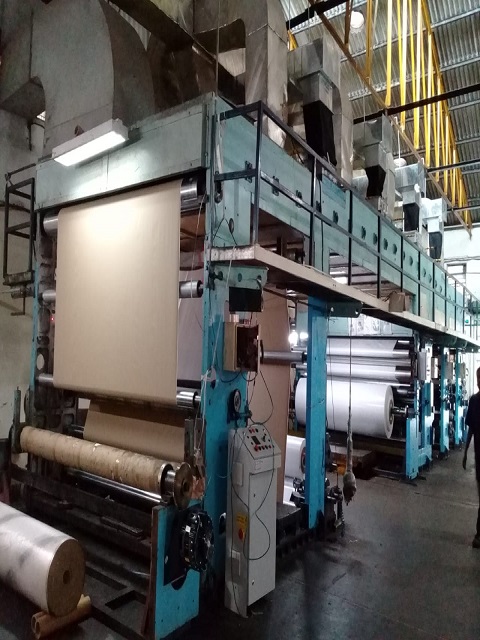
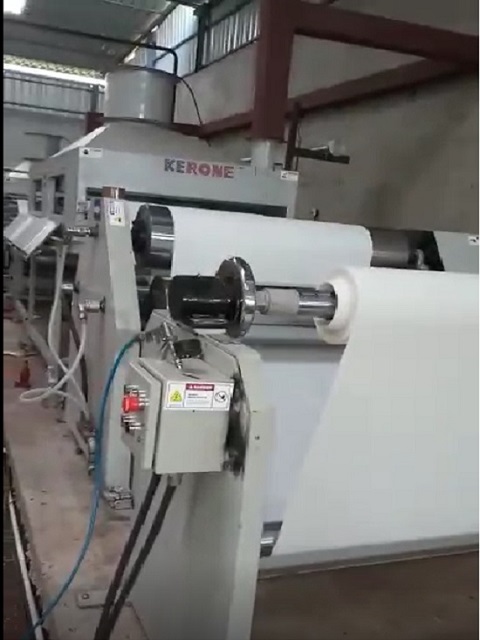
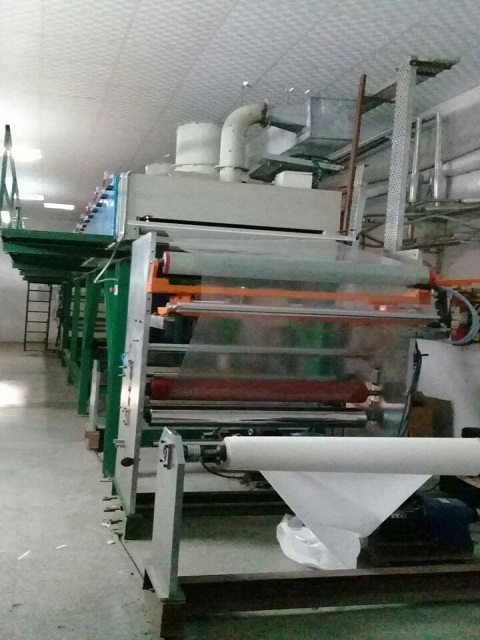
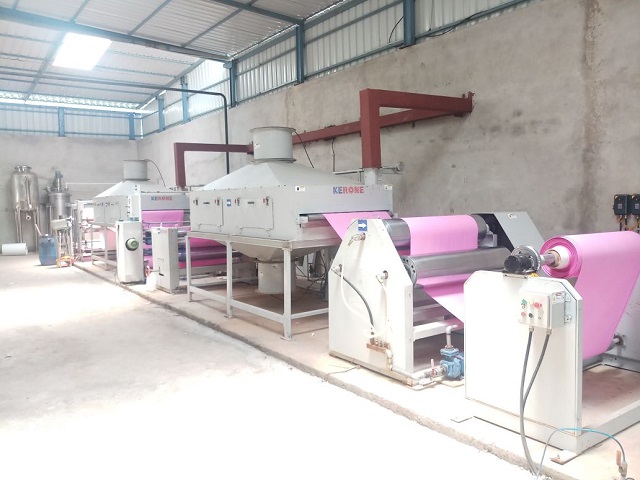
Kerone’s Coating and Impregnation Plants are engineered for high-performance surface treatment, substrate enhancement, and controlled deposition of coatings on flexible and rigid materials. With more than 50 years of industrial experience, Kerone delivers systems that offer uniform coating, deep impregnation, and consistent material performance across diverse industries.
Coating and impregnation has increased its demand in market over time, Coating is a method of applying a coat of a liquid on a solid material by way of absorption. Coating also used for applying a fine powdered coat on the solid core using a liquid sticker kind of approach. Often the solid material is coated to protect it from the dust, chemical reaction, slightly thickening the material; it also results in the increase in the life of material. Impregnation is also achieved by the similar kind of process that is followed for coating and the equipment used. Impregnation is to convert the liquid into solid granules; it dries out the liquid content the solid granule structure left behind. With a suitable formulation this can be used to deliver a liquid active material that can be released on application. Impregnation is useful for getting a solid granule from a liquid active.
Why Choose Kerone Coating and Impregnation Plant
We at KERONE design and manufacture various types of coating and impregnation dyers, as the dryer is most critical to achieve best and efficient result hence we take all the precision and design with the care to avail the best possible result in coating and impregnation plant. We design and built solution for various type of coating
Designed with robust engineering and automation, these plants ensure controlled coating thickness, superior material bonding, and efficient chemical utilization. Each plant is tailored to resin type, substrate characteristics, line speed, and application method.
Types and Features of Coating and Impregnation Plant
Kerone offers complete coating and impregnation lines, including resin baths, drying sections, curing chambers, and precision rollers. These systems support materials like paper, fabrics, foils, films, fiberglass, carbon fiber, non-woven, and technical textiles.
Application of Coating Plant:
PVC / Polyurethane coating for manufacturing synthetic leather
Silicon coating on paper
Emery coating on paper / cloth (coated abrasive manufacturing plant)
Manufacturing of fax paper / thermal paper
Manufacturing of carbonless paper
Copper and aluminum foil coating on various materials
Lead coating on M.S. foil
Coating dryer for special coating on plastic
Bitumen coating on paper
Teflon coating on glass cloth to strengthen the glass
Key Features
Uniform coating thickness with precise control
Customizable resin baths and deposition systems
Automated tension control for continuous operations
Energy-efficient heating, drying, and curing zones
Designed for solvent-based, water-based, and resin formulations
High-speed production with minimal material waste
Modular design for flexible plant expansion
Advanced monitoring and control systems
Powered by AI, ML & IoT
Future-Ready Engineering Driven by AI & IoT
Our advanced AI, ML, and IoT technologies, this solution delivers smarter automation, real-time insights, and predictive intelligence to enhance efficiency and drive future-ready growth.
Real-Time Monitoring & Control
Continuous tracking of process parameters with instant adjustments.
Predictive Maintenance
Intelligent fault detection to prevent failures before they occur.
Adaptive Process Optimization
Dynamic tuning of operations for maximum output and efficiency.
Cloud Dashboards & Analytics
Unified access to real-time insights and performance trends.
Energy & Resource Savings
Smarter utilization of energy to cut costs and reduce waste.
Secure IoT Connectivity
Encrypted data flow with seamless integration across plant systems.
Applications of Coating and Impregnation Plant
Kerone Coating and Impregnation Plant are suitable for:
Electrical insulation materials
Industrial laminates and composites
Packaging films and foils
Fiberglass & technical textiles
Adhesive, resin, and polymer impregnation
Decorative and protective coating lines
Kerone’s Coating and Impregnation Plants deliver consistent, high-quality coated materials with excellent process reliability. With modular engineering and automation, Kerone ensures optimal coating efficiency and long-term production performance.
Seamless Export Connections Global & Local
Our Global Footprint in Industrial Excellence
Delivering world-class industrial and process solutions across countries with precision, innovation, and reliability.
Peru
Chile
Argentina
Mexico
Colombia
Brazil
USA
Canada
United Kingdom
France
Germany
Spain
Italy
Netherlands
Sweden
Switzerland
Poland
Portugal
Ireland
Czechia
Romania
Hungary
Austria
Greece
Kazakhstan
Uzbekistan
Turkmenistan
Algeria
Egypt
Nigeria
Kenya
South Africa
Saudi Arabia
UAE
Israel
Russia
India
China
Japan
South Korea
Thailand
Vietnam
Malaysia
Singapore
Indonesia
Philippines
Australia
New Zealand
Pan-India Presence. Local Expertise.
Raipur
Bilaspur
Panaji
Vasco da Gama
Gandhinagar
Ahmedabad
Surat
Chandigarh
Gurgaon
Shimla
Manali
Bengaluru
Mysore
Kochi
Pune
Mumbai
Thane
Navi Mumbai
Hyderabad
Chennai
Coimbatore
Kolkata
Lucknow
Jaipur
Udaipur
Jodhpur
Dehradun
Haridwar
Bhubaneswar
Product Gallery
Frequently Asked Questions (FAQ)
Coating applies a surface layer of liquid or powdered material onto a substrate to protect, thicken, or functionalize the surface, while impregnation drives a liquid resin or active material into the body of a porous substrate so it becomes part of the material's internal structure once dried. Coating equipment typically uses rollers, knives, or spray systems to deposit a controlled surface layer, while impregnation equipment uses resin baths and pressure or vacuum saturation to drive liquid into fibers, paper, or fabric before the drying and curing stage converts it to a solid embedded structure. Many Kerone plants combine both functions in a single line, since materials like electrical insulation laminates and technical textiles often require impregnation for structural strength followed by a surface coating for additional protection or finish.
Most Kerone coating and impregnation systems are designed as continuous roll-to-roll lines, since impregnation depth and coating uniformity are easiest to control with steady web speed and consistent bath dwell time. However, batch configurations are available for lower-volume or highly specialized formulations, particularly during product development when formulation changes happen frequently and continuous line changeover time would be impractical. Continuous lines suit high-volume applications like electrical insulation laminate production and technical textile finishing, where consistent throughput justifies the line's fixed setup. Batch systems suit smaller production runs, custom orders, or R&D-stage materials where flexibility matters more than maximum throughput. Kerone evaluates production volume, product variety, and changeover frequency when recommending which configuration best fits a client's actual operating pattern.
A common misconception is that increasing resin bath concentration always improves impregnation depth, when in reality excessive concentration can cause surface pooling without proportional internal penetration, and the correct combination of bath dwell time, pressure, and viscosity matters more than concentration alone. Buyers sometimes assume a single set of process parameters will work across different substrate batches, when variations in paper or fabric porosity between supplier lots can shift impregnation behavior and require parameter adjustment. Another misconception is that faster drying always improves throughput, when drying too quickly can trap solvent or create surface skinning that prevents proper internal cure. Understanding that impregnation is a materials science problem as much as a mechanical one helps buyers set realistic expectations for process development time before reaching stable production parameters.
Quality control typically includes resin pickup weight measurement, either through inline gravimetric sensors or periodic sample weighing, surface coating thickness verification, and visual inspection for impregnation voids, streaking, or incomplete saturation. For electrical insulation and structural laminate applications, dielectric strength testing and mechanical property testing on finished samples confirm the impregnation has achieved the required internal bonding. Bath viscosity and resin solids content are monitored continuously since drift in either parameter directly affects pickup consistency. Statistical tracking of these parameters over a production run helps identify gradual drift before it produces out-of-specification material. Kerone builds inline monitoring into the resin bath and drying sections specifically so quality issues are caught during production rather than discovered only during destructive testing of finished rolls.
Manufacturers upgrading from older, manually adjusted impregnation equipment to a modern automated line typically see throughput increases of 25 to 60 percent, driven by higher achievable line speeds, reduced downtime for manual parameter adjustment, and fewer stoppages for rework on out-of-specification material. Continuous resin circulation and filtration systems also reduce the frequency of bath-related stoppages compared to older batch-replenished baths. Energy-efficient drying zones allow higher line speeds without sacrificing cure quality, since heat transfer is optimized rather than relying on oversized but inefficient heating elements. The actual productivity gain depends on the specific bottleneck in the existing process, whether that is bath dwell time, drying capacity, or material handling between process stages, so Kerone typically benchmarks the client's current line before sizing the replacement system's capacity.
Electrical insulation laminates and impregnated materials are typically evaluated against IEC and NEMA insulation system standards, which specify dielectric strength, thermal endurance class, and moisture resistance requirements that the impregnation process must reliably achieve. Manufacturing process documentation, including resin batch records, bath parameters, and cure profiles, often needs to be retained to support insulation system qualification testing required by these standards. For impregnated materials destined for specific end markets such as automotive or industrial motors, additional OEM-specific material specifications may apply on top of the general IEC or NEMA framework. Kerone designs plants with the process repeatability and data logging needed to support this documentation trail, since insulation system certification depends on demonstrating consistent manufacturing process control, not just a single passing test sample.
Beyond electrical insulation laminates, coating and impregnation plants serve abrasive product manufacturing through emery and grit coating on paper or cloth backing, thermal and carbonless paper production through specialty chemical coatings, synthetic leather manufacturing through PVC or polyurethane coating on fabric substrates, and technical textile production for fiberglass and carbon fiber reinforcement materials used in composites. Specialty packaging applications use impregnation for grease-resistant or moisture-barrier paper products. Industrial laminate producers rely on resin impregnation to bond layered materials such as decorative or structural laminates used in construction and furniture. Each of these applications has distinct resin chemistry, substrate porosity, and cure requirements, which is why Kerone configures bath composition, dwell time, and drying profiles specifically around the target material rather than using a generic impregnation recipe across applications.
Kerone systems support a wide range of substrates including paper, foils, fabrics, films, fiberglass, carbon fibre, non-woven, and technical textiles.
Uniformity is achieved through precision metering rollers, controlled resin baths, automated tension control, and closed-loop monitoring systems that maintain consistent coating thickness and deposition levels.
Yes. The plants are designed to work with water-based, solvent-based, and resin-based formulations, with compatibility adjustments in drying, curing, and deposition sections.
Absolutely. Kerone provides full adjustability for coating thickness, bath viscosity, pressure settings, nip roller gaps, and process speed to meet specific application requirements.
The plants can integrate hot air dryers, IR heating, microwave-assisted drying, UV curing, and thermal curing chambers, depending on the material and coating chemistry.
Energy efficiency is achieved through optimized heat recovery, insulated drying sections, variable-frequency drives, and smart automation that reduces wastage and power consumption.
Yes. The modular design allows easy integration of additional coating heads, dryers, unwinding/rewinding stations, curing zones, and automation upgrades.
These plants are widely used in electrical insulation, laminates, composites, packaging, adhesives, technical textiles, specialty films, and functional industrial materials.
Kerone’s custom-designed heating and processing solutions are built to meet the demands of your growing operations. Whether you’re upgrading equipment, expanding production, or need a tailor-made solution
 Peru
Peru Chile
Chile Argentina
 Mexico
 Colombia
 Brazil
 USA
USA Canada
 United Kingdom
 France
 Germany
 Spain
Spain Italy
Italy Netherlands
 Sweden
 Switzerland
 Poland
 Portugal
 Ireland
 Czechia
 Romania
 Hungary
 Austria
 Greece
 Kazakhstan
 Uzbekistan
 Turkmenistan
 Algeria
 Egypt
Egypt Nigeria
 Kenya
Kenya South Africa
 Saudi Arabia
 UAE
UAE Israel
 Russia
 India
India China
China Japan
Japan South Korea
 Thailand
 Vietnam
 Malaysia
 Singapore
 Indonesia
 Philippines
 Australia
 New Zealand