
























































































































































































































































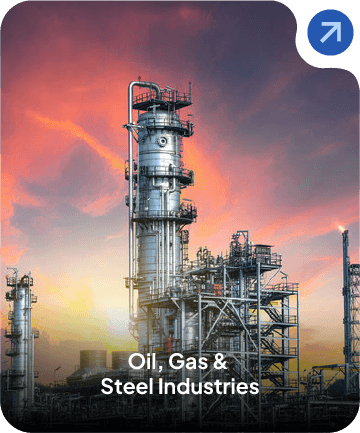















A heat exchanger is a device built for efficient heat transfer from one medium to another. The media may be separated by a solid wall, so that they never mix, or they may be in direct contact. They are widely used in space heating, refrigeration, air conditioning, power plants, chemical plants, petrochemical plants, petroleum refineries, natural gas processing, and sewage treatment. One common example of a heat exchanger is the radiator in a car, in which the heat source, being a hot engine-cooling fluid, water, transfers heat to air flowing through the radiator (i.e. the heat transfer medium).
Description
Shell and tube heat exchanger :- The shell & tube heat exchanger is
the commonest type. It is the
most common type of heat exchanger
in oil refineries and other
large chemical processes, and
is suited for higher-pressure
applications. As its name implies,
this type of heat exchanger
consists of a shell (a large
pressure vessel) with a bundle
of tubes inside it. One fluid
runs through the tubes, and
another fluid flows over the
tubes (through the shell) to
transfer heat between the two
fluids. The set of tubes is
called a tube bundle, and may
be composed by several types
of tubes: plain, longitudinally
finned, and other types.
Plate heat exchanger :-
All plate heat exchangers look
similar on the outside. The
difference lies on the inside,
in the details of the plate
design and the sealing technologies
used. Hence, when evaluating
a plate heat exchanger, it is
very important not only to explore
the details of the product being
supplied, but also to analyze
the level of research and development
carried out by the manufacturer
and the post-commissioning service
and spare parts availability.